
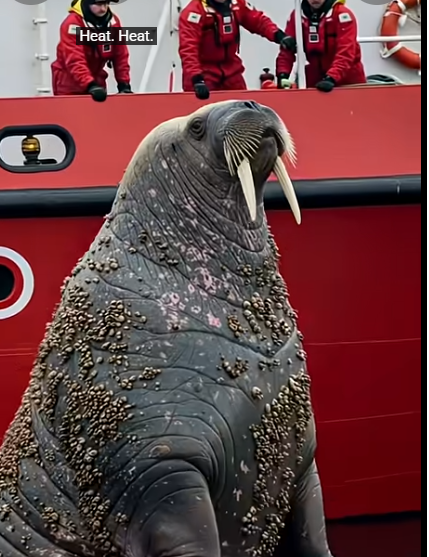
Towering over the deck of a red research vessel, a massive walrus hauls itself aboard.
Covered in barnacles and old scars, it catches the crew’s attention.
This isn’t just a curious visitor — this walrus needs help. Fast.

Time for Treatment
With foamy soap and gloved hands, the crew begins the careful process of cleaning the walrus’s thick, barnacle-encrusted skin.

It’s a mix of science and compassion — disinfecting wounds, loosening debris, and giving the animal a chance to heal.
Scrubbing Off the Pain
A rotating brush is gently applied to its back, removing years’ worth of barnacle buildup and dead tissue. It’s a slow, gritty task.

Each pass brings relief, but also reveals more damage beneath — a reminder of the hardships this creature has faced at sea.
Water and Patience
Floating partially in the water, another crewmember continues the care — rinsing the skin with soap and seawater.

The walrus lies mostly still, breathing heavily but calmly. Despite the discomfort, it senses safety here.
“I Don’t Like This” — But It’s Working
Back on deck, the walrus receives a final rinse. Patches of pink show healing beneath once-dark skin.

Though visibly unamused by the cold spray and handling, it endures — because survival is often uncomfortable before it’s peaceful.
Sitting Strong, Sitting Free
In the last image, the walrus sits tall. Clean. Clear-eyed. Powerful again.

The wounds may still heal, but dignity has returned.
And soon, this gentle titan will return to the sea — stronger than before.