
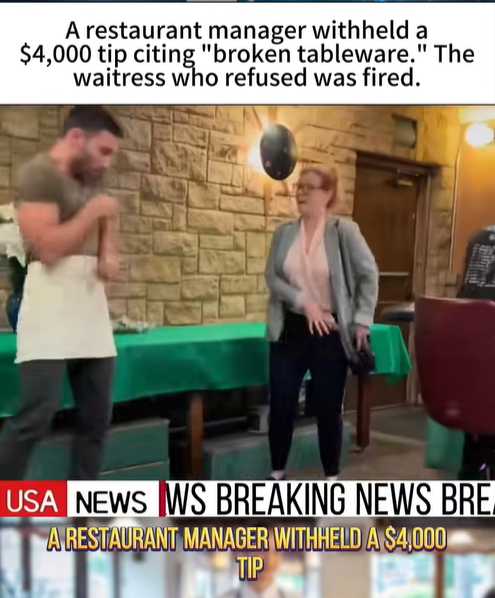
A dispute over a $4,000 tip has sparked outrage after a restaurant waitress was reportedly fired for refusing to accept her manager’s decision to withhold the gratuity.
The incident, which has been widely shared online, has ignited debate about workplace fairness, tip ownership, and employee rights in the service industry.
The Generous Tip That Sparked Conflict
According to reports, a group of diners left a substantial $4,000 tip following their meal — a rare and significant gratuity that would have made a major difference for the staff involved.
However, management allegedly withheld the tip, citing “broken tableware” and damages that reportedly occurred during the shift.
The decision quickly led to tension between staff and management.
“Broken Tableware” Cited as Reason
The restaurant manager reportedly justified the withholding of the tip by pointing to damaged items, suggesting the cost should offset the gratuity.
Critics argue that tips are generally considered the property of the server, not the establishment, and that deducting damages from gratuities can raise legal and ethical concerns depending on local labor laws.
Labor experts note that policies regarding tip distribution vary by state, but transparency and documentation are key in such disputes.
Waitress Refuses — And Is Fired
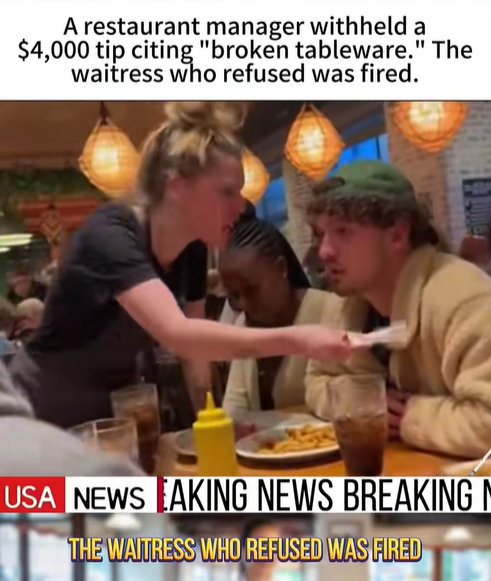
When the waitress allegedly challenged the decision and refused to accept the withholding of the tip, she was reportedly terminated.
The firing has drawn strong reactions online, with many expressing sympathy for the employee and questioning the restaurant’s handling of the situation.
Supporters say the waitress stood up for what she believed was right, even at the cost of her job.
Social Media Backlash
As news of the incident spread, calls for accountability intensified. Some commenters demanded clarification from the restaurant, while others highlighted the financial challenges faced by service workers who rely heavily on tips.
The story has also reignited broader discussions about wage structures in the restaurant industry, where gratuities often form a significant portion of workers’ income.
A Larger Debate About Tip Ownership
This case underscores ongoing debates about tip policies in restaurants across the country.
While businesses can enforce workplace rules and damage policies, many argue that gratuities should not be used to offset operational costs without clear agreements in place.
As of now, no official legal action has been publicly confirmed, but the incident continues to generate attention.
For many, it serves as a reminder of the delicate balance between management authority and worker rights in the hospitality industry.