
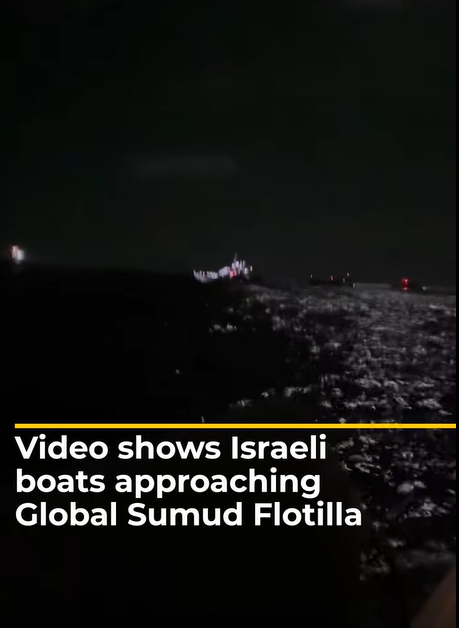
In a video shared widely on social media, members of the Global Sumud Flotilla can be seen communicating with Israeli military vessels under the red glow of their cabin lights.
The flotilla, a civilian-led effort, was on course when they were informed by Israeli forces that their presence placed them “within an active war zone.”
Israeli Military Orders Change of Course
The footage shows Israeli boats rapidly approaching the flotilla under the cover of night.
Bright lights pierce through the darkness of the sea as loud commands are broadcast over the radio.
One voice from the Israeli military is heard instructing:
“You are instructed to change your course.”
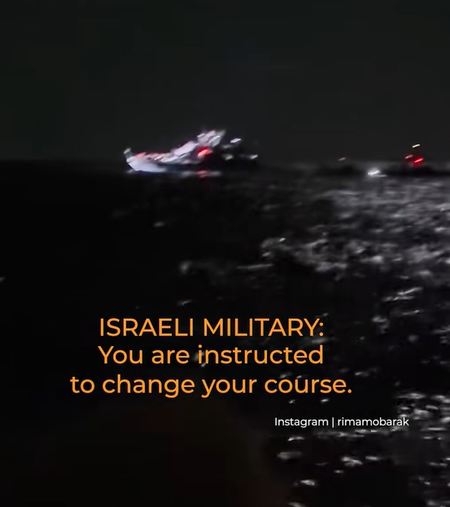
This directive underscores the escalating tension between the humanitarian flotilla and Israel’s military patrols in the region.
Legal Resistance from the Flotilla
In response, members of the Global Sumud Flotilla can be heard calmly insisting that their situation be handled through legal proceedings in court rather than through coercion at sea.
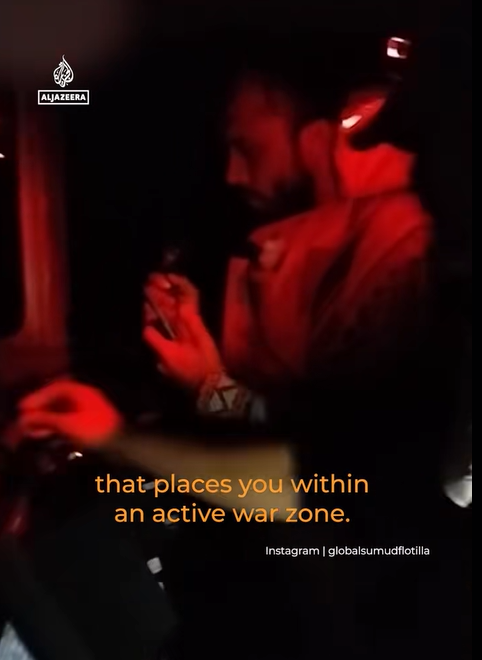
Their composed tone reflects the group’s broader mission: to assert their right to navigate and to challenge military restrictions through lawful means rather than armed confrontation.
Broader Context and Implications
This confrontation highlights the ongoing volatility of the region’s waters and the risks faced by activist flotillas challenging blockades or restrictions.

While Israeli authorities argue the need for military control for security purposes, flotilla organizers frame their journey as one of peaceful defiance, international solidarity, and humanitarian commitment.
The standoff, captured in dramatic video clips, reinforces how the seas remain not only a physical border but also a symbolic battleground of narratives — between military authority and civilian resistance, between security imperatives and humanitarian activism.