
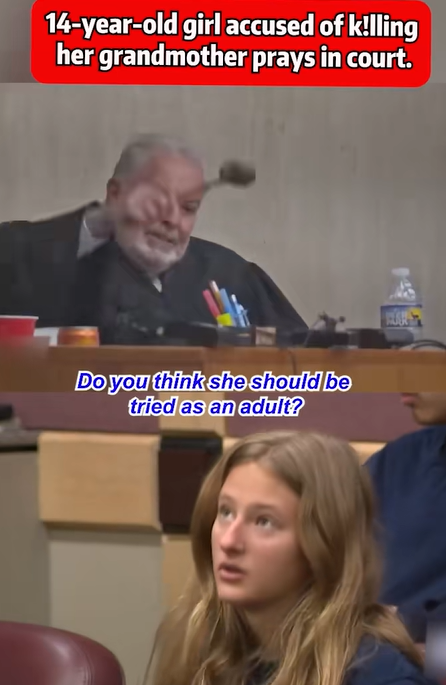
A 14-year-old girl stands accused of committing one of the most heartbreaking crimes imaginable—taking the life of her own grandmother.
The case has left the community stunned and questioning how such violence could emerge from someone so young.
An Emotional Courtroom Scene
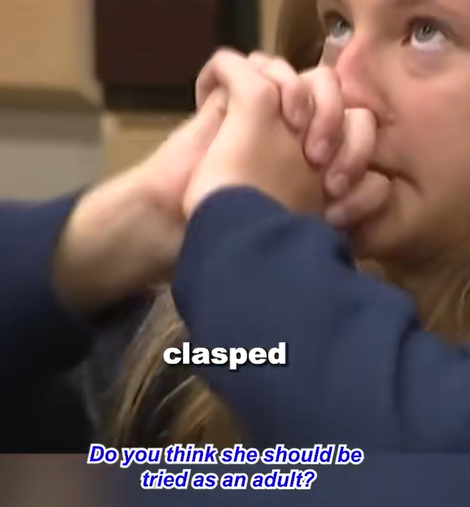
In court, the young girl was seen with her hands clasped in prayer, her face a mixture of fear and desperation.
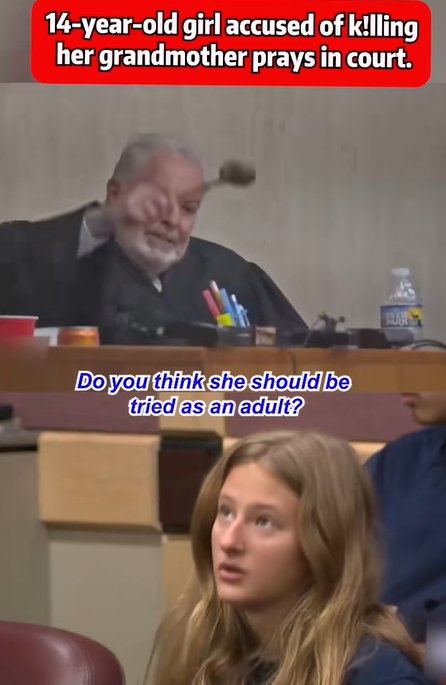
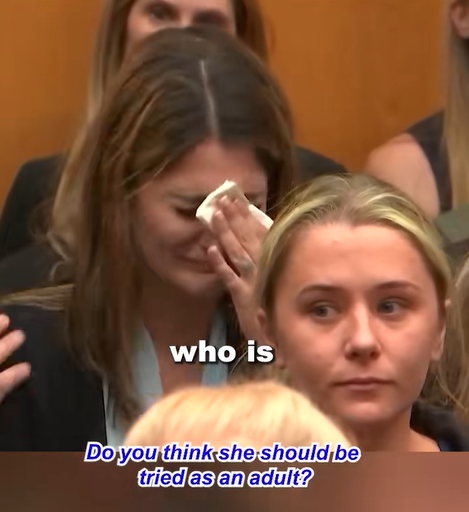
The judge’s gavel fell as family members sat in tears, torn between grief and disbelief.
The courtroom atmosphere was one of sorrow, anger, and unanswered questions.
Families Divided by Pain
Loved ones of the victim expressed overwhelming grief.
For them, the tragedy was twofold: the loss of a beloved grandmother and the shattering reality that a child within the family could be responsible.
Emotions in the courtroom reflected this devastating conflict.
The Judge’s Difficult Decision
The judge must now weigh one of the toughest questions in juvenile justice: should a 14-year-old girl face trial as an adult?
On one hand, the seriousness of the crime calls for strong accountability. On the other, her young age raises concerns about maturity, rehabilitation, and the potential for change.
Society’s Divided Opinion
This case highlights a larger debate about how justice should treat children accused of heinous crimes.
Some argue that the punishment must match the crime, regardless of age, while others insist that teenagers deserve the chance to reform rather than face lifelong punishment.
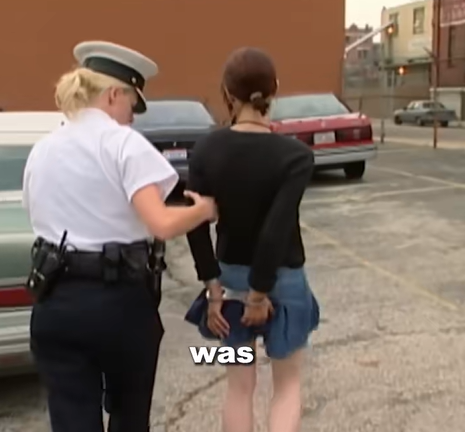
Justice, Compassion, and Uncertainty
The case of the 14-year-old girl accused of killing her grandmother is not only about crime and punishment—it’s about family, loss, and society’s struggle to balance justice with compassion.
The final decision will shape not only her future but also how we, as a society, define accountability for children.