
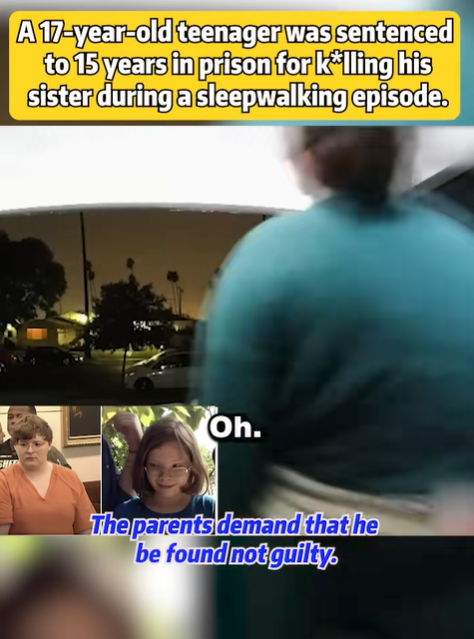
A 17-year-old boy has been sentenced to 15 years in prison after being found guilty of killing his younger sister during what he claimed was a sleepwalking episode.
The case, which has sparked widespread debate about criminal responsibility and mental health, left the family divided and the courtroom in emotional turmoil.
The Incident
According to police reports, the tragic event took place late at night in the family’s home.
The teenager allegedly attacked his 12-year-old sister while sleepwalking, unaware of his actions.
When he awoke and realized what had happened, he immediately called for help, but it was too late to save her.
Investigators said there were no signs of premeditation, and the boy appeared confused and distraught when officers arrived on the scene.
The Courtroom Decision
Despite claims of involuntary actions caused by a sleep disorder, the court ruled that the teen was still responsible for his sister’s death.
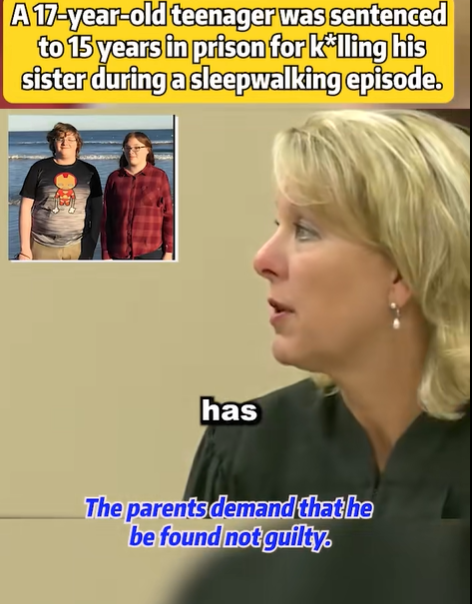
The judge acknowledged the case’s complexity but ultimately imposed a 15-year prison sentence, citing the severity of the outcome and the need for accountability.
Parents Plead for His Release
The boy’s parents have publicly pleaded for leniency, insisting that their son should not be treated as a criminal. “He loved his sister more than anything,” his mother said tearfully outside the courtroom. “This was not murder — it was a tragic accident.”
They have vowed to appeal the ruling, hoping for a reconsideration based on medical evidence of the teen’s sleep disorder.
Expert Opinions on Sleepwalking Defense
Sleepwalking, or somnambulism, has been used as a defense in rare criminal cases, though proving it can be difficult. Experts say that while genuine sleepwalking can cause people to perform complex actions unconsciously, distinguishing it from deliberate violence requires extensive neurological testing and psychological evaluation.
Legal analysts note that this case could reignite debate about how courts should handle “automatism” defenses, where individuals act without conscious control.
Public Reaction
The case has drawn mixed reactions online, with some sympathizing with the family’s pain and others questioning the leniency of sleepwalking-related defenses.
“It’s heartbreaking either way,” one commenter wrote. “Two lives destroyed — one lost forever and another behind bars.”