
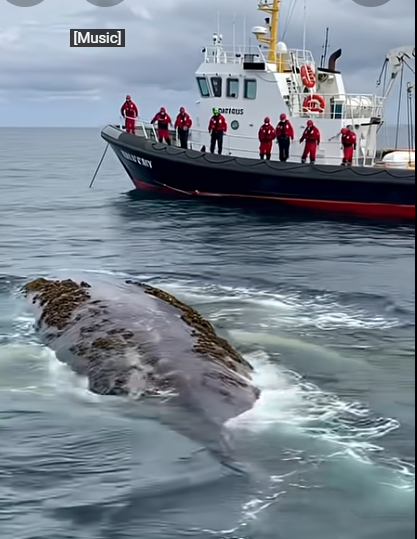
A whale surfaces near a research vessel, its body weighed down by an overwhelming infestation of barnacles and marine parasites.
Its once-smooth back is now rough, crusted with life that should not belong there.
The crew on board watches closely — this is not just a sighting, it’s a call for help.
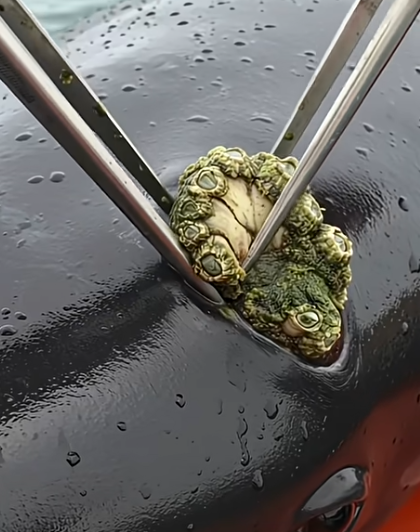
A Closer Look at the Burden
Zooming in reveals a dense colony of barnacles, worms, and algae that have attached themselves to the whale’s skin, forming a suffocating armor.
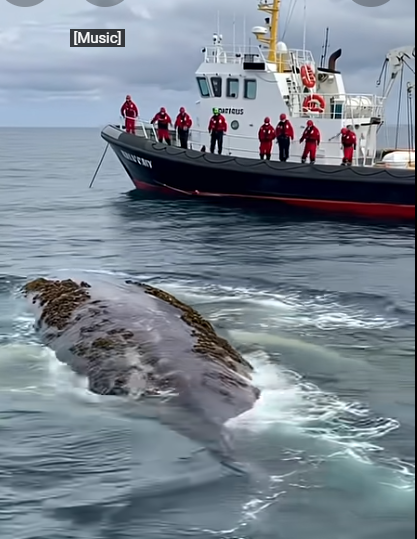
The infestation is not just uncomfortable — it’s life-threatening, restricting the whale’s movement and causing infections.
The Delicate Operation Begins
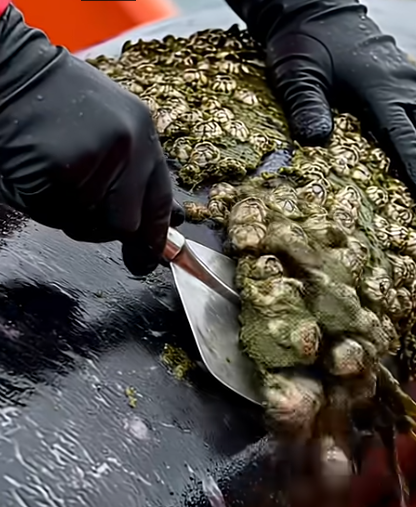
With great care, marine specialists begin removing the barnacles.
Using precision tools, they scrape off the dense masses of hardened shells and sludge, layer by layer.
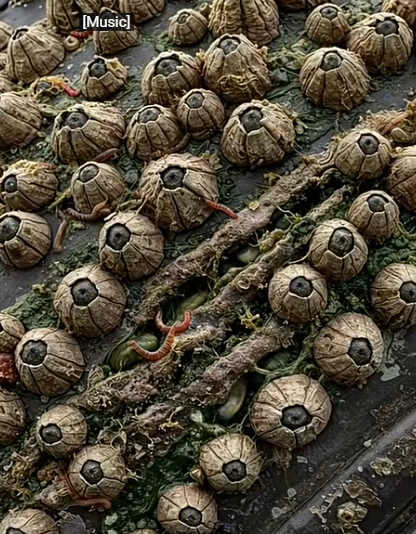
Each removal is a moment of relief for the whale, a step closer to freedom.
Painful Parasites Removed
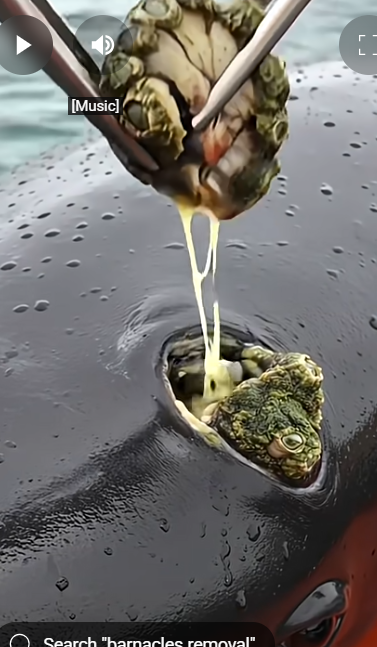
Some barnacles have burrowed deep into the whale’s flesh.
Scientists delicately extract them using tweezers, revealing ooze and embedded organisms beneath.
It’s a painful but necessary step to restore the whale’s health and comfort.
Returning to the Deep
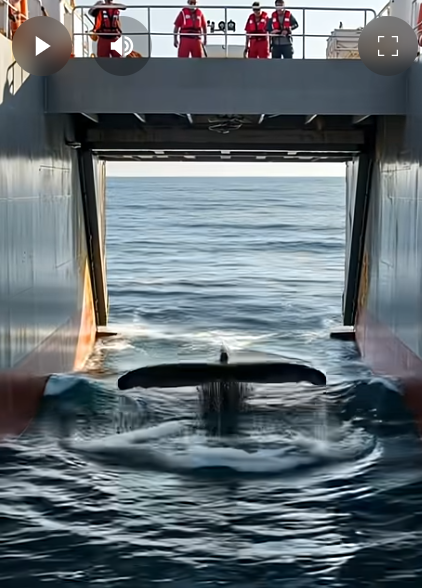
Once the whale is cleaned and treated, it is gently released back into the sea.
As its tail slips into the water, it leaves behind not only a trail of bubbles, but also a message: even the mightiest creatures need help sometimes.
This story reminds us that while marine giants like whales are resilient, they are not immune to the consequences of pollution and parasitic overgrowth.
But with compassion and intervention, healing is possible.
Every rescue like this is a small victory for nature — and a big reminder of our responsibility to protect it.