
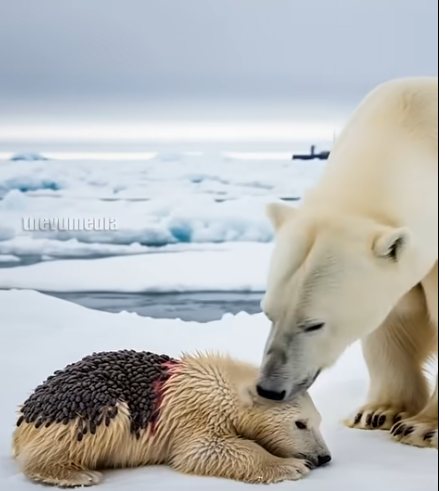
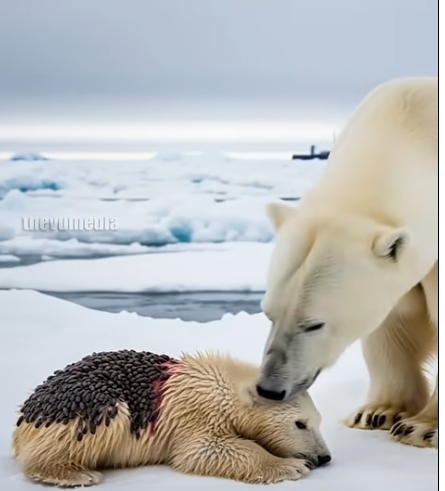
In the icy silence of the Arctic, a polar bear gently nudges her cub, who lies still on the frozen shore.
The cub’s back is covered in what looks like parasites or an unknown dark growth, and blood stains the snow.
The mother’s expression is heartbreaking—tender, desperate, and helpless.
Reaching Out to Humans
In an astonishing act of trust, the mother bear approaches a red research vehicle.
She places her paw on the front, standing on two legs as if pleading.
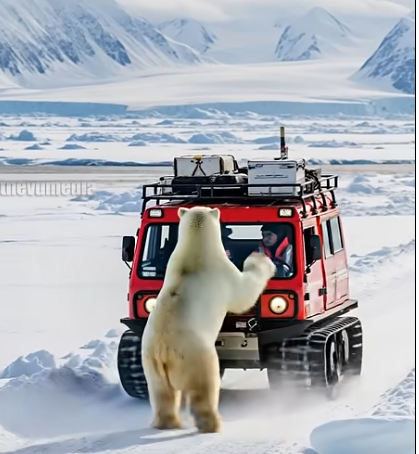
Inside, a stunned scientist makes eye contact—this is no attack. It’s a call for help.
A Team is Formed
Moments later, the bear leads a human through the ice field. They move together—not predator and prey, but partners in purpose.
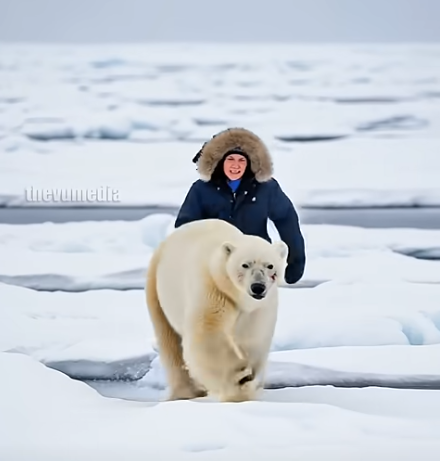
The urgency is clear: she wants him to follow. And he does, without hesitation.
The Healing Begins
With the mother nearby, the man kneels beside the ailing cub. Using a tool, he sprays a cleaning solution on the wounds and begins to remove the foreign bodies embedded in the fur.
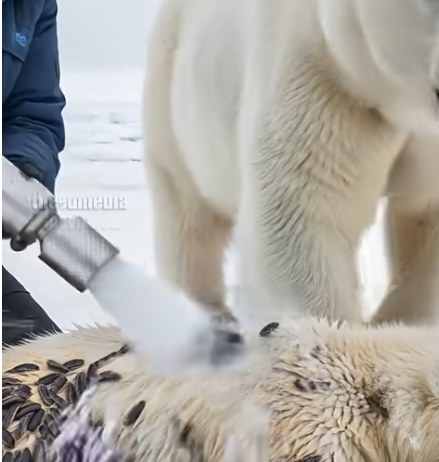
The mother watches closely but does not interfere—her eyes speak of hope.
Recovery in Sight
The cub, now cleaned and bandaged, sits upright beside its watchful mother.
The wound is still visible, but healing has begun. The humans did their part.
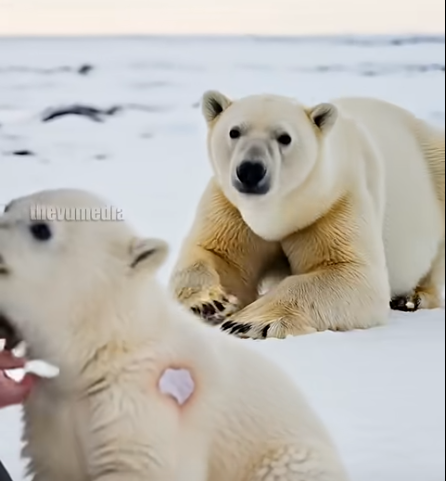
The mother did hers. And the cub, against all odds, survived.
This is not just a rescue—it is a miracle born of mutual understanding. A mother bear risked everything to seek help. A human answered.
And somewhere on the ice, a cub now breathes easier because nature and humanity chose compassion over fear.