
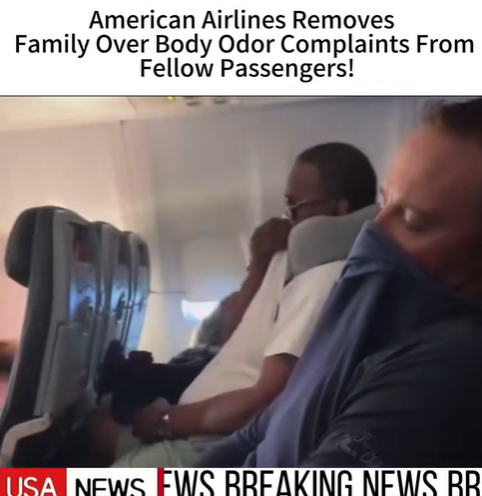
A recent incident aboard an American Airlines flight has sparked widespread discussion after a family was reportedly asked to leave the aircraft following complaints from other passengers about body odor.
While details are still emerging, the situation has raised questions about airline policies, passenger comfort, and how sensitive issues are handled at 30,000 feet.
Tension Builds Inside the Cabin
According to reports circulating online, several passengers expressed discomfort during boarding, claiming there was a strong odor coming from a nearby row.
In video clips shared on social media, passengers can be seen covering their noses with clothing and neck pillows. Some appear visibly frustrated as conversations unfold in the cabin.
It remains unclear how many formal complaints were made before flight crew intervened.
Crew Intervention and Decision

Flight attendants reportedly assessed the situation before involving airline supervisors. Eventually, the family in question was asked to deplane before takeoff.
Airlines generally maintain policies allowing removal of passengers if a situation affects the comfort or safety of others. However, incidents involving personal hygiene can be especially delicate and controversial.
American Airlines has not publicly released a detailed statement regarding the specific circumstances of this case.
Social Media Divided
As footage spread online, reactions were mixed. Some viewers supported the airline’s decision, arguing that passenger comfort is part of the flying experience.
Others criticized the move, saying the situation could have been handled more privately and respectfully.
The incident has ignited debate about where airlines draw the line between individual rights and overall passenger comfort.

Broader Questions About Airline Policies
Commercial airlines operate under strict guidelines designed to ensure safety and maintain a manageable cabin environment. Situations involving strong odors, disputes, or discomfort often require quick judgment calls from crew members.
Experts note that while airlines can deny boarding for various reasons, how those decisions are communicated and executed can significantly affect public perception.
An Ongoing Conversation
As airlines continue navigating crowded flights and heightened sensitivities, this incident serves as a reminder of the challenges crews face in balancing fairness, discretion, and passenger satisfaction.
For now, the story remains a viral flashpoint — one that highlights the complexities of shared spaces in modern air travel.