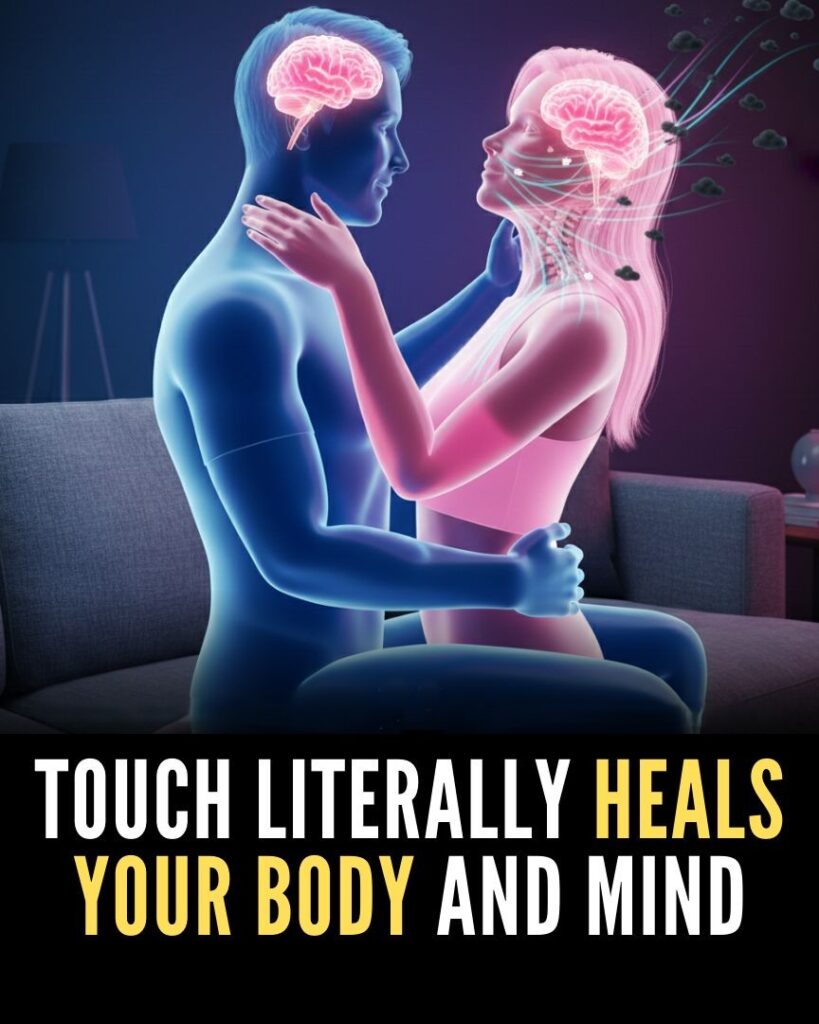
A hug feels good—we’ve always known that.
But now, science is showing something even deeper: touch doesn’t just comfort us emotionally. It actively changes our biology.
In a world increasingly shaped by screens, distance, and digital interaction, new research reminds us of something profoundly human: we are wired to heal through connection.
What the Science Says About Touch
Researchers from Ruhr University Bochum analyzed 137 scientific studies involving nearly 13,000 participants, examining the effects of touch-based interventions on physical and mental health.
Their conclusion was clear and consistent:
touch is not optional for wellbeing—it is foundational.
Across all ages and health conditions, touch-based practices led to measurable improvements in both mental and physical outcomes.
Touch as a Biological Signal of Safety
Touch communicates directly with the nervous system.
When safe, consensual touch occurs, the body receives a powerful message:
You are safe. You are not alone.
This triggers a cascade of biological responses:
- Stress hormones such as cortisol decrease
- Oxytocin (often called the “bonding hormone”) is released
- Heart rate and blood pressure stabilize
- The nervous system shifts out of fight-or-flight mode
These changes don’t just feel good—they protect long-term health.
Why Touch Is Especially Powerful for Newborns
One of the strongest effects was seen in infants, particularly through kangaroo care—skin-to-skin contact between a newborn and caregiver.
For newborns, this form of touch:
- Regulated stress hormone levels
- Improved breathing patterns
- Supported liver function
- Stabilized heart rate and body temperature
In early life, touch is not just comforting—it is developmental medicine.
The Impact of Touch on Adult Mental Health
For adults, regular touch had significant psychological benefits:
- Reduced anxiety
- Lower levels of depression
- Decreased perception of physical pain
- Improved emotional regulation
Even simple, everyday forms of touch—like hugs, holding hands, or gentle contact—were associated with better mental resilience.
Importantly, the benefits were strongest in people experiencing illness, stress, or emotional difficulty. When the body is struggling, touch becomes even more powerful.
Human Touch vs. Artificial Touch
The researchers also explored robot-assisted touch therapies.
While these technologies provided some physical relief, they consistently fell short in one critical area: emotional connection.
Human touch—especially from someone familiar or a trained professional—produced stronger emotional and psychological benefits.
This suggests that touch is not only mechanical; it is relational.
The presence of another human matters.
Why Touch Matters More Than Ever Today
Modern life often minimizes physical contact:
- More remote work
- More digital communication
- Less face-to-face interaction
Yet this research confirms something deeply intuitive:
the human body still needs human contact.
Safe, respectful, consensual touch—whether through affection, caregiving, or professional therapy—is not a luxury. It is a biological need.
A Simple but Powerful Reminder
Touch speaks a language older than words.
At a cellular level, it tells the body:
You belong. You are supported. You are loved.
In times of stress, illness, or emotional struggle, that message becomes even more important.