
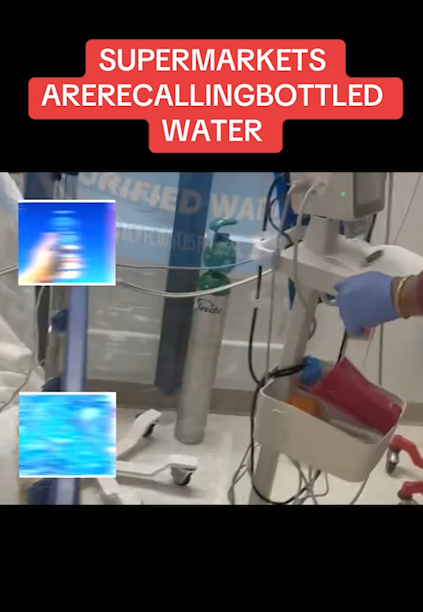
A wave of panic is spreading online after alarming videos and images began circulating with a bold warning: supermarkets are recalling bottled w*ter. What started as a few scattered posts has now turned into a full-blown viral storm, leaving consumers questioning what’s safe to drink — and whether something serious slipped through the cracks.
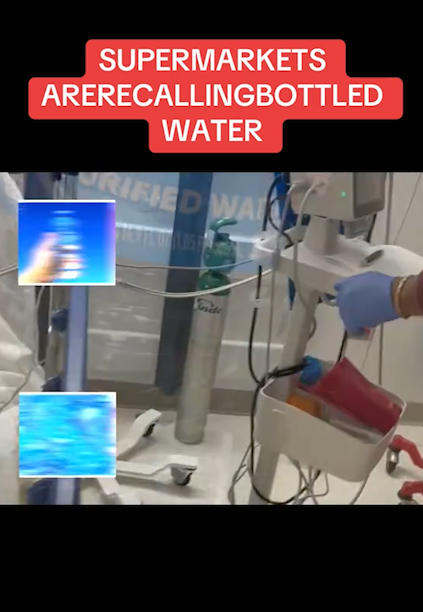
The footage gaining the most attention appears to show a medical or laboratory setting. Tubes, machines, gloves, and containers filled with colored liquid are visible, giving the impression of testing or treatment. Overlaid text claims bottled w*ter sold in stores is being pulled from shelves, triggering immediate concern among viewers.
And the internet did what it always does — it panicked first, asked questions later.
“Is this what we’ve been drinking?”
“Why isn’t this on the news?”
“I just bought bottled w*ter yesterday…”
These reactions flooded comment sections within minutes.
According to posts spreading alongside the video, certain batches of bottled w*ter are allegedly being recalled due to potential contamination concerns. While official details remain unclear in many viral uploads, the imagery alone has been enough to send shockwaves through social media feeds.
Health experts warn that misinformation can spread just as fast as genuine alerts, urging the public to rely on official recall notices from health authorities and retailers rather than viral clips alone. At the same time, they acknowledge why people are alarmed — bottled w*ter is something millions consume daily without a second thought.
Recalls, when they do happen, are typically issued for reasons such as bacterial contamination, chemical exposure, packaging defects, or improper filtration. In most cases, only specific brands, plants, or lot numbers are affected — not the entire bottled w*ter supply. But viral posts rarely include those nuances, which fuels confusion.
What makes this situation especially unsettling is the lack of clear sourcing in many shared clips. Logos are blurred. Labels are missing. Context is thin. Yet the presentation feels urgent and medical — a combination that naturally triggers fear.
Consumer safety advocates say this is exactly why transparency matters. When people feel information is being hidden or delayed, trust erodes quickly. Even unverified claims can cause real-world consequences, including panic buying, unnecessary disposal of products, and distrust in retailers.
Some supermarkets have already responded to customer concerns, reportedly reassuring shoppers that no new nationwide recall has been announced beyond standard, limited product advisories. Still, many shoppers are now double-checking labels, googling batch numbers, and questioning what’s in their carts.
Social media platforms have become flooded with reaction videos, some claiming insider knowledge, others warning of “what’s coming next.” As usual, the truth is harder to pin down than the headline.
Experts strongly recommend this:
– Check official food safety agency websites
– Look for retailer-issued recall notices
– Do not rely solely on viral videos or captions
At this stage, what’s clear is not that all bottled w*ter is unsafe — but that fear spreads faster than facts.
Still, the images have left a mark. A product once seen as the safest option now feels uncertain to many. And once that doubt sets in, it’s hard to wash away.
Whether this turns out to be a limited recall, a misinterpreted video, or something more serious, one thing is certain: consumers are paying attention — and they’re demanding answers.
Until verified information becomes clearer, the question echoing across the internet remains unsettlingly simple:
If even bottled wter isn’t beyond suspicion… what is?*